
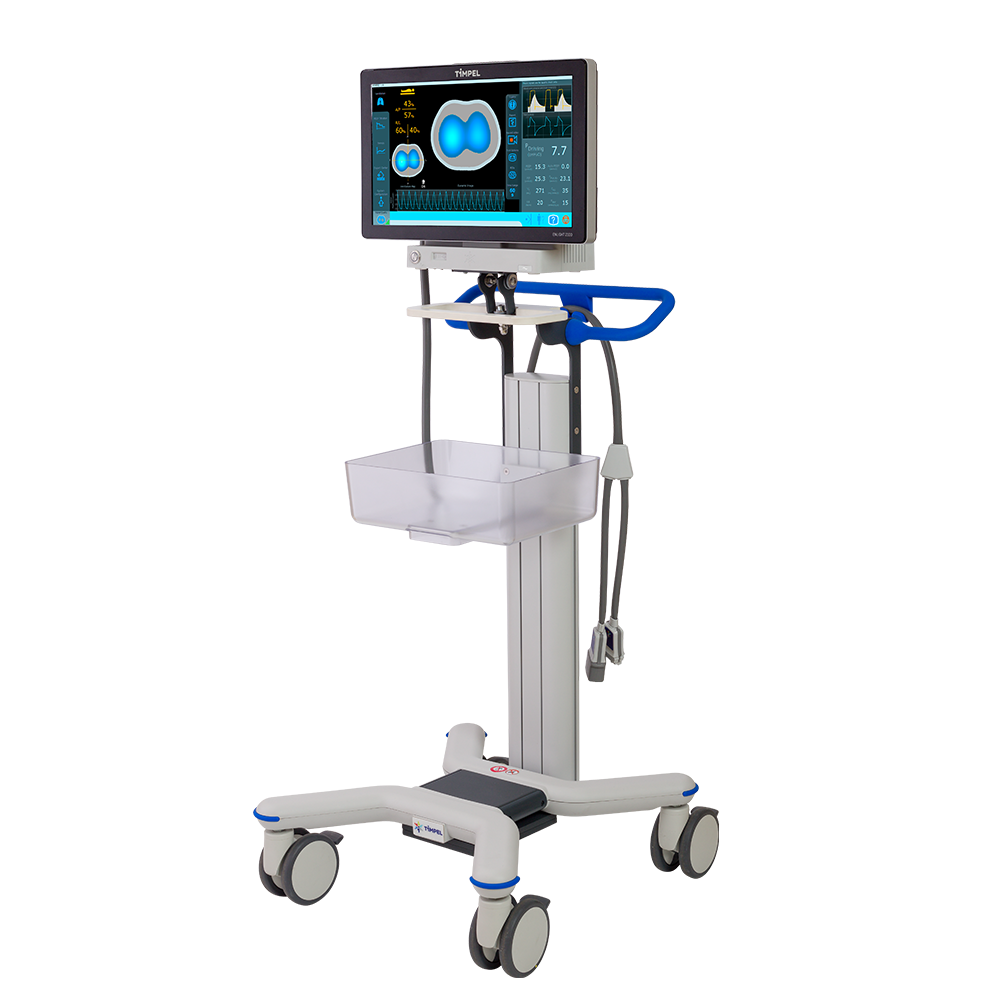



Enlight 2100
Advanced Electrical Impedance Tomography for Precision Ventilation
See regional lung function in real time. Understand the response. Support more informed clinical decisions.
ENLIGHT 2100 by TIMPEL is an advanced bedside Electrical Impedance Tomography (EIT) system designed to provide real-time visualization of regional lung ventilation and support the assessment of pulmonary perfusion.
In mechanically ventilated patients, conventional respiratory measurements provide important information about overall respiratory function but may not fully reveal how ventilation is distributed across different lung regions. ENLIGHT 2100 adds a regional perspective, transforming electrical impedance measurements into dynamic images that help clinicians observe lung behavior and evaluate responses to ventilatory interventions.
By combining real-time lung imaging, respiratory waveforms, regional distribution maps and specialized clinical analysis tools, ENLIGHT 2100 supports a more individualized, data-informed approach to respiratory assessment.
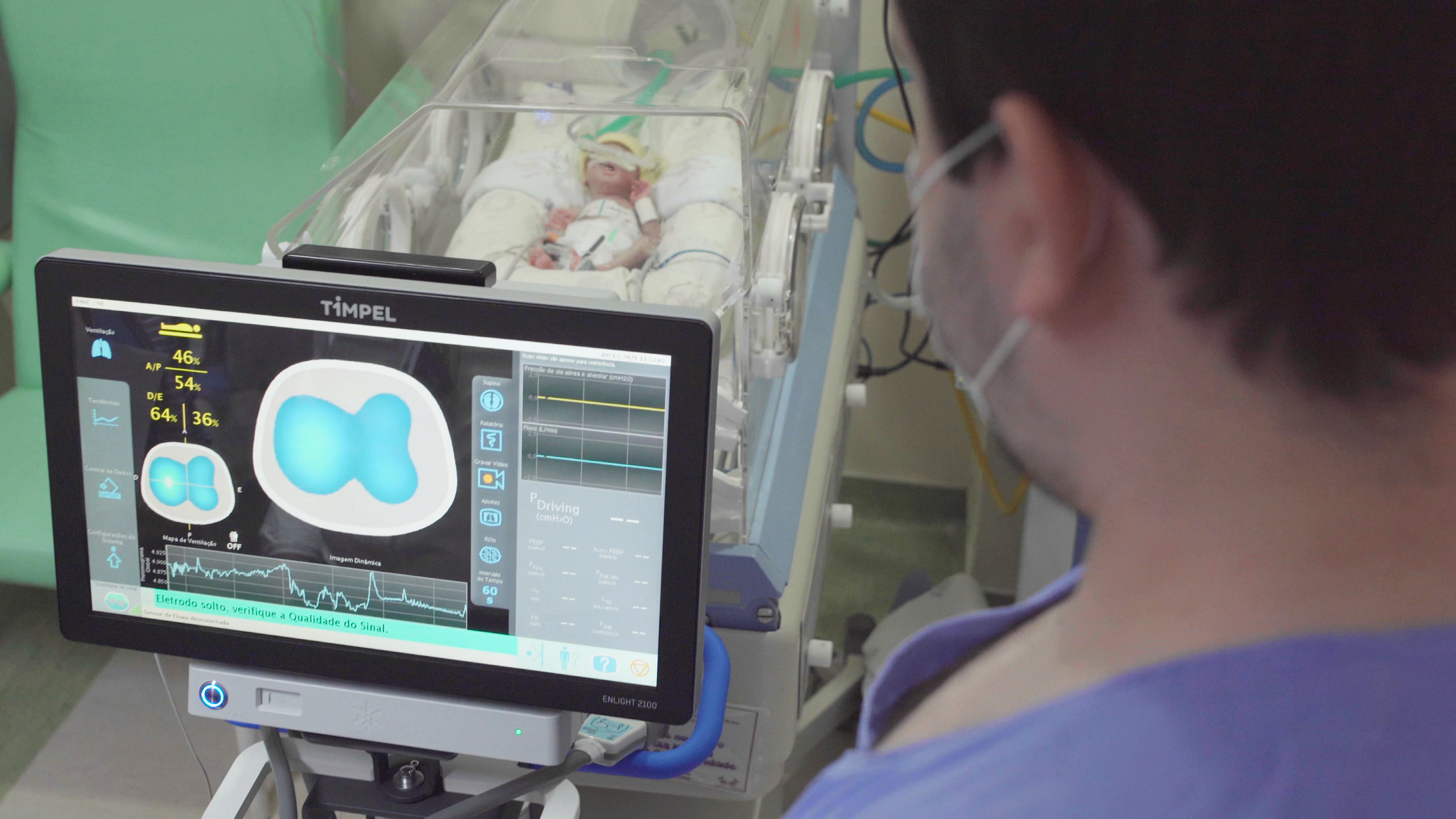
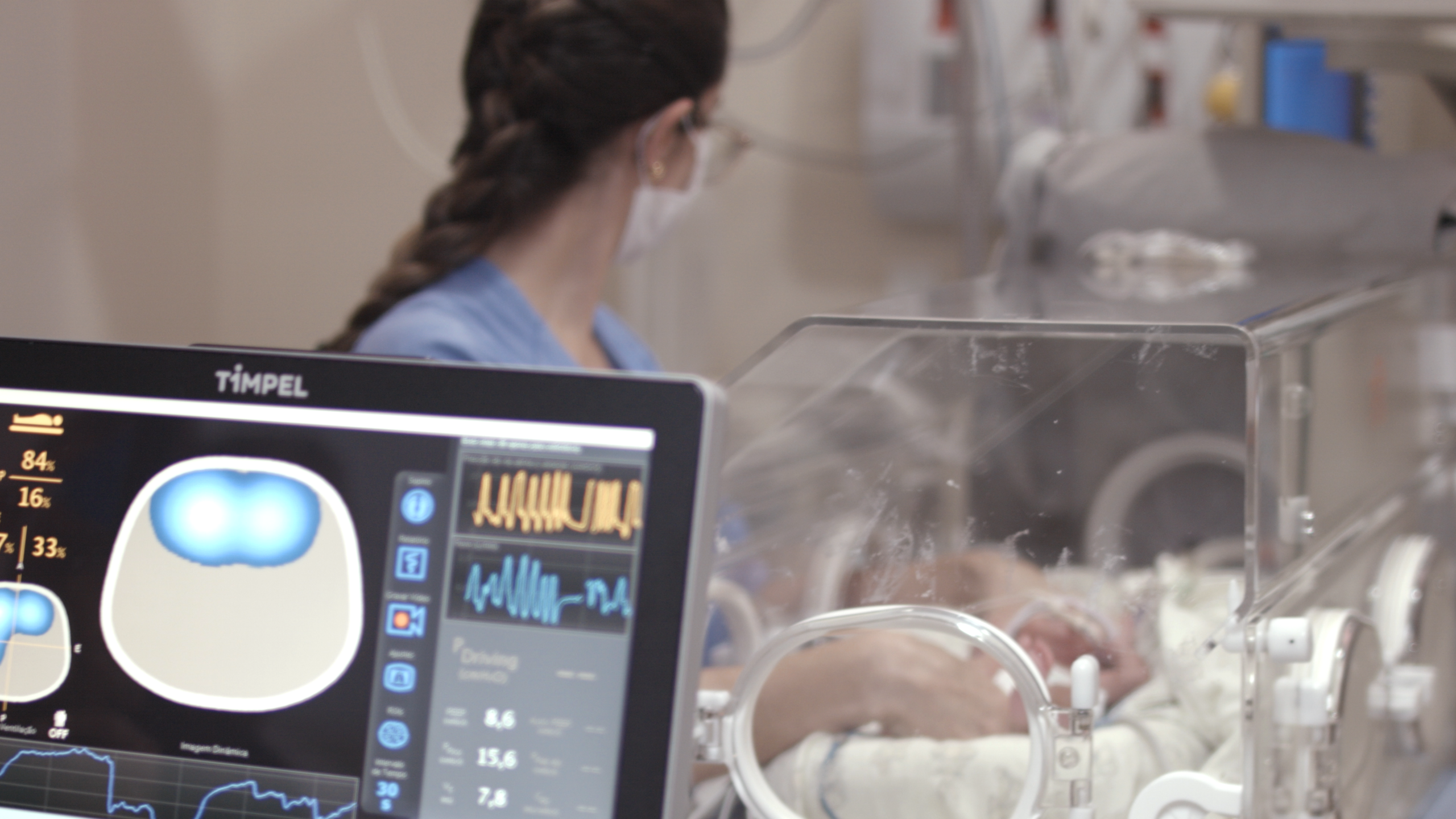
Designed for bedside use in critical care, the system is intended for adult, pediatric and neonatal patients receiving assisted or controlled mechanical ventilation, using the appropriate electrode belt for each patient.
ENLIGHT 2100 brings regional lung monitoring closer to the point of care, helping healthcare professionals move beyond global measurements and gain a more detailed understanding of the patient’s individual respiratory response.
Key Benefits
- Real-Time Visualization of Regional Lung Ventilation
See how ventilation is distributed across the lungs, breath by breath.
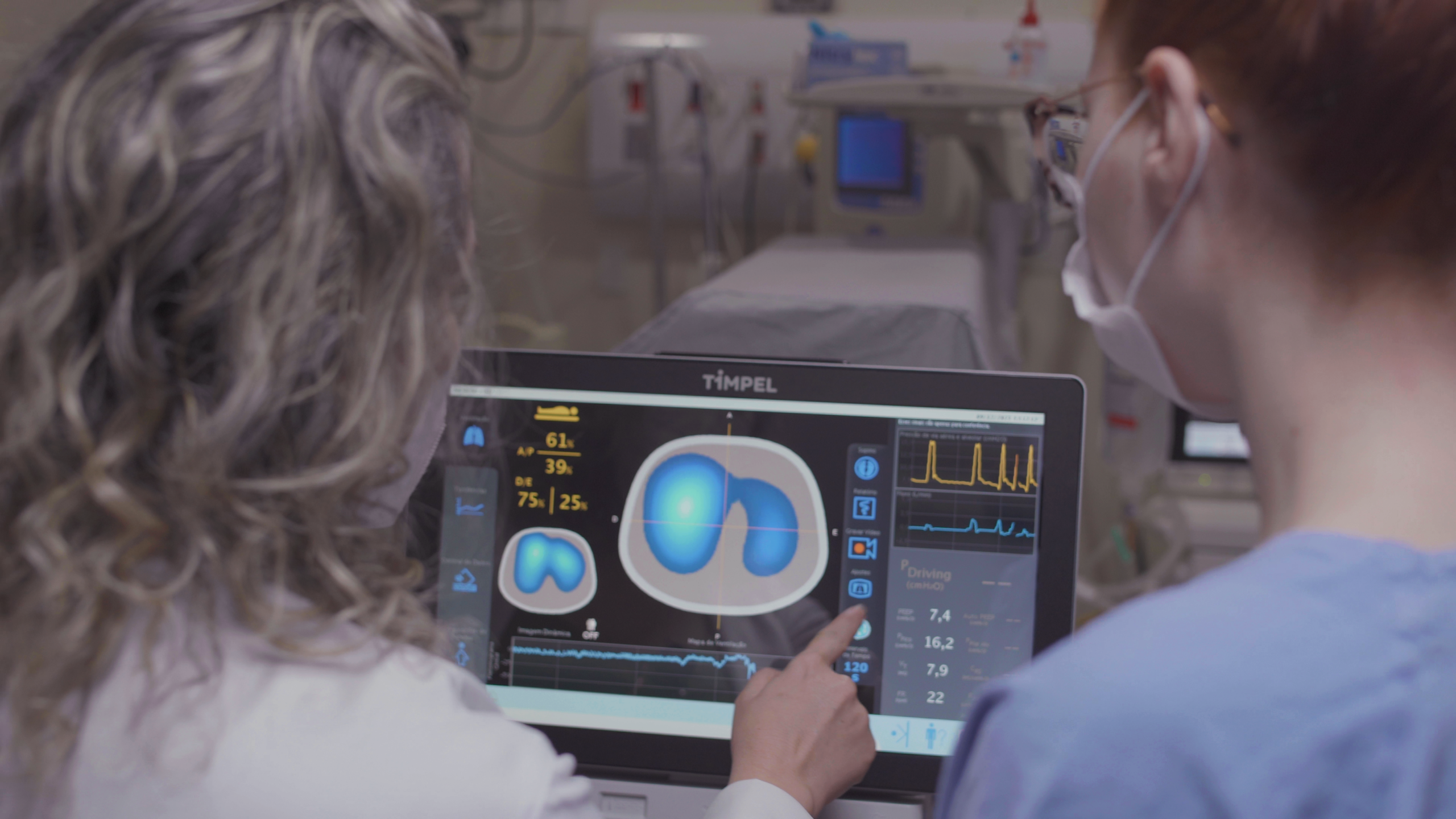
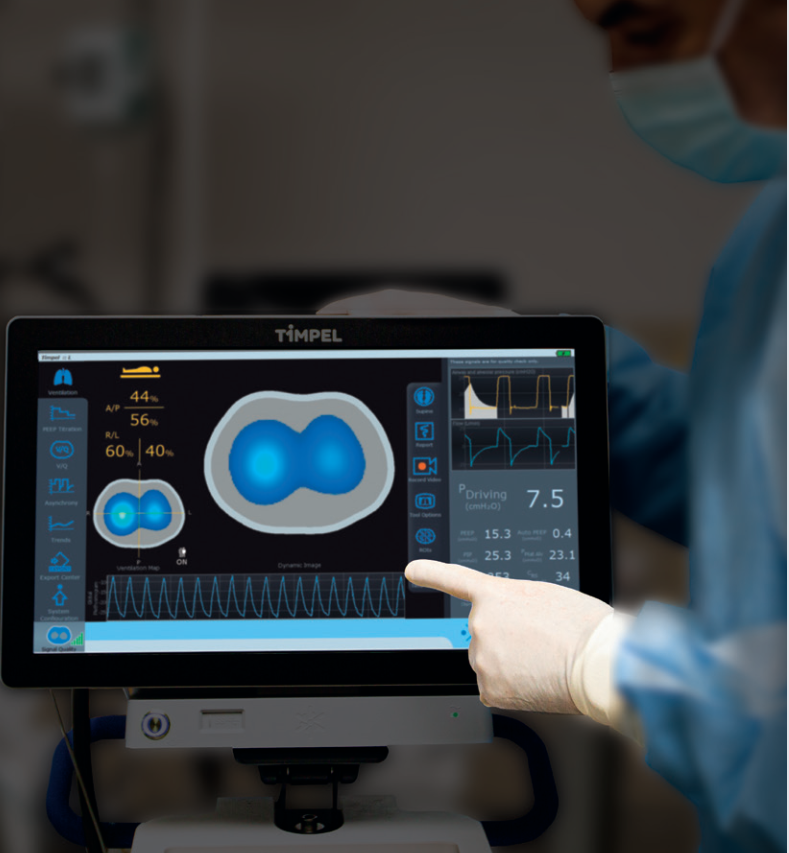
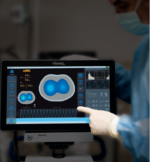
ENLIGHT 2100 generates dynamic images of changes in electrical impedance within a transverse section of the thorax. Its temporal resolution of 50 frames per second provides continuous visual information about regional ventilation.
The system helps clinicians assess ventilation distribution, identify regional asymmetries and observe changes associated with ventilatory interventions.
By making regional differences visible, ENLIGHT 2100 provides an additional perspective on respiratory function that complements conventional monitoring.
- Individualized Assessment of Mechanical Ventilation
Every patient has a different respiratory profile.
Pulmonary mechanics and responses to mechanical ventilation may vary considerably between patients and between regions of the same lung. ENLIGHT 2100 provides regional information that helps clinicians investigate these differences and assess how the lungs respond to changes in ventilatory support.
The system combines dynamic images with ventilation distribution ratios, regional measurements and respiratory parameters, supporting the evaluation of ventilation strategies in the context of each patient’s clinical condition.
- Non-Invasive, Radiation-Free Imaging
Regional lung monitoring without ionizing radiation.
ENLIGHT 2100 uses Electrical Impedance Tomography, a non-invasive imaging technique that does not require ionizing radiation.
A dedicated electrode belt positioned around the patient’s thorax delivers a low-intensity, high-frequency electrical current. The system measures the resulting impedance variations and processes them into images of regional lung ventilation.
This approach is suitable for bedside monitoring and allows repeated observation of changes in lung function without relying on radiological imaging for each assessment.
- Regional Assessment During PEEP Titration
Evaluate the balance between lung collapse and hyperdistension.
The PEEP Titration Tool provides regional information during a PEEP titration maneuver, helping clinicians assess changes in ventilation distribution, respiratory-system compliance, collapse and hyperdistension.
The system automatically detects PEEP changes and presents regional and cumulative information to support the evaluation of different PEEP levels.
By displaying the distribution of these effects across the lungs, ENLIGHT 2100 helps clinicians investigate the trade-offs associated with ventilatory settings and supports patient-specific assessment.
- Identification of Patient–Ventilator Asynchronies
Gain additional insight into patient–ventilator interaction.
Patient–ventilator asynchronies can be difficult to identify through conventional respiratory waveforms alone. ENLIGHT 2100 includes an Asynchrony Tool designed to identify and quantify specific events, including double triggering and reverse triggering.
The tool also provides information on breath stacking, including the volume associated with stacked cycles expressed in mL/kg.
Real-time and summary views help clinicians examine the occurrence of these events and assess their potential relevance to the patient’s ventilation.
- Ventilation–Perfusion Assessment
Understand regional ventilation in relation to pulmonary blood flow.
The V/Q Tool provides information about the regional distribution of pulmonary perfusion and its relationship to ventilation.
Using a dedicated assessment procedure, the system generates a pulmonary perfusion map and a V/Q Coupling Map, helping clinicians investigate regional mismatches between ventilation and perfusion.
This additional information can support the assessment of impaired gas exchange and help guide further clinical evaluation and targeted interventions.
The V/Q Tool has specific procedural requirements and is not indicated for neonatal or pediatric patients. Its use must follow the manufacturer’s instructions and applicable clinical protocols.
- Trends and Longitudinal Analysis
Understand what has changed and evaluate the response over time.
The Trends Screen allows clinicians to review recorded data, compare selected time points and investigate changes in regional ventilation and respiratory mechanics.
With trend data available for periods of up to 48 hours, ENLIGHT 2100 supports retrospective assessment of the patient’s respiratory course and the evaluation of responses to clinical interventions.
Event marking and graphical analysis help correlate changes in monitored parameters with relevant clinical events, supporting a more structured review of the patient’s progress.
- Integration of Regional Imaging and Respiratory Mechanics
View complementary information in a unified clinical interface.
ENLIGHT 2100 combines regional lung images with respiratory measurements and waveforms on the same screen.
When the dedicated flow sensor is correctly positioned and the relevant measurement conditions are met, the system can display airway pressure, flow and volume curves alongside EIT data. Additional parameters may include driving pressure, alveolar plateau pressure, auto-PEEP, compliance and airway resistance.
This integrated presentation helps clinicians interpret regional ventilation patterns alongside respiratory mechanics rather than relying on either source of information in isolation.
The Technology Behind ENLIGHT 2100
Electrical Impedance Tomography (EIT)
Electrical Impedance Tomography is an imaging technique that reconstructs internal changes in electrical impedance using measurements obtained from electrodes positioned around the body.
In the lungs, the movement of air during breathing changes the electrical properties of thoracic tissues. ENLIGHT 2100 measures these variations and uses dedicated algorithms to produce dynamic images representing regional changes in lung ventilation.
The system operates at a feed-current frequency of 125 kHz and provides 50 real frames per second, enabling high temporal resolution for the observation of respiratory dynamics.
Unlike imaging techniques that rely on ionizing radiation, EIT offers a non-invasive approach to regional lung monitoring at the bedside.
How ENLIGHT 2100 Works
- Electrode placement: A dedicated electrode belt is positioned around the patient’s thorax, according to the appropriate application guidelines and patient size.
- Electrical signal acquisition: A low-intensity electrical current is applied through the integrated electrodes, and the system measures changes in electrical impedance.
- Image reconstruction: The acquired signals are processed into dynamic images and maps representing regional ventilation distribution.
- Clinical interpretation: Regional images, numerical parameters and respiratory waveforms provide complementary information for assessment by a qualified healthcare professional.
- Monitoring and review: Recorded data, trends and reports support the comparison of different time points and the assessment of changes following clinical interventions.
Clinical Tools and Functionalities
ENLIGHT 2100 combines several analysis tools within one bedside system. Availability of certain tools may depend on the device configuration and applicable approval.
Ventilation Screen
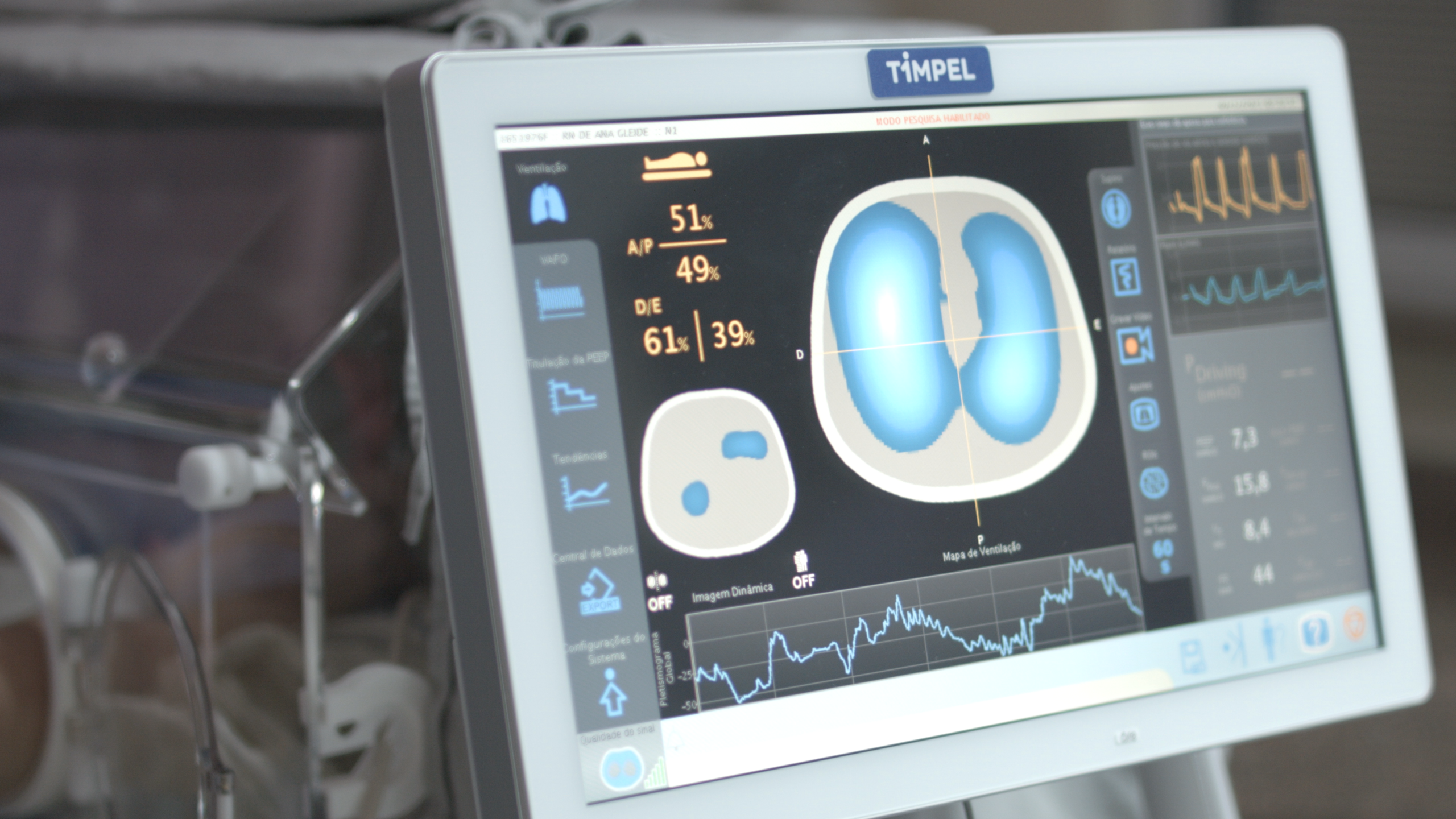
The Ventilation Screen provides the principal visualization of regional lung ventilation.
It includes:
- Dynamic Image: Real-time visualization of impedance changes within the thoracic cross-section.
- Ventilation Map: Regional distribution of ventilation during the respiratory cycle, accompanied by numerical distribution parameters.
- Plethysmogram: Waveform representation of impedance changes globally or within selected regions of interest.
- Ventilation Distribution Ratios: Numerical information supporting the assessment of regional ventilation distribution.
- Regional Analysis: Assessment of differences in ventilation between selected regions of interest.
- Patient Positioning: Adjustment of the displayed ventilation information according to the patient’s prone or supine position.
- Event Marking: Registration of relevant events and patient positioning to support subsequent analysis.
These functions help clinicians observe regional changes and compare ventilation patterns under different clinical conditions.
Ventilatory Parameters and Flow Sensor
ENLIGHT 2100 incorporates a dedicated flow sensor that can be used with ventilators from different manufacturers.
The sensor provides respiratory measurements and waveforms that complement the information obtained through EIT.
Depending on the ventilation mode, signal quality and measurement conditions, the displayed information may include:
- Positive end-expiratory pressure (PEEP)
- Peak airway pressure
- Tidal volume
- Respiratory rate
- Driving pressure
- Alveolar plateau pressure
- Auto-PEEP
- Respiratory-system compliance
- Airway resistance
- Airway pressure, flow and volume waveforms
Certain calculated parameters are available only during controlled ventilation cycles and when the relevant measurement conditions are satisfied.
The integration of respiratory mechanics and regional impedance data helps clinicians examine both global respiratory measurements and the distribution of ventilation across the lungs.
PEEP Titration Tool
The PEEP Titration Tool supports the evaluation of regional lung responses during PEEP titration.
It provides information on:
- Regional and cumulative collapse
- Regional and cumulative hyperdistension
- Respiratory-system compliance
- Changes in regional ventilation distribution
- The response observed at different PEEP levels
- Graphical analysis and exportable PEEP titration reports
Automatic detection of PEEP changes supports the recording and analysis of the titration procedure.
By presenting regional information alongside cumulative measurements, the tool helps clinicians assess the relationship between lung recruitment, collapse and hyperdistension during the maneuver.
The tool provides additional information to support clinical assessment. It does not independently determine the PEEP setting to be used.
Asynchrony Tool
The Asynchrony Tool supports the assessment of selected patient–ventilator interaction events.
Its functions include:
- Identification of double triggering
- Identification of reverse triggering
- Quantification of detected asynchrony events
- Assessment of breath stacking
- Evaluation of stacked-cycle volume in mL/kg
- Real-time visualization and summary analysis
The resulting information helps clinicians investigate asynchronies and assess their occurrence in the context of the patient’s respiratory pattern.
V/Q Tool
The V/Q Tool extends regional assessment beyond ventilation to include pulmonary perfusion.
The procedure uses a bolus of hypertonic saline administered through an appropriate central venous access during a brief respiratory pause. The difference in electrical conductivity allows the system to assess the distribution of pulmonary perfusion.
The resulting information includes:
- Pulmonary Perfusion Map: Visualization of the regional distribution of pulmonary perfusion.
- Perfusion Distribution Ratios: Regional measurements across predefined regions of interest.
- V/Q Coupling Map: A combined representation of ventilation and perfusion distribution.
- Processed Perfusion Video: Visualization of the acquired impedance changes during the procedure.
- Data Export: Access to recorded results for review and documentation.
The V/Q Coupling Map helps distinguish regions with different ventilation–perfusion relationships, providing additional information for the assessment of regional mismatch.
The procedure requires appropriately trained healthcare professionals and must be interpreted alongside the patient’s clinical condition and other relevant investigations. The tool is not indicated for neonatal or pediatric patients.
Trends Screen
The Trends Screen provides graphical and numerical review of recorded parameters over time.
Its functions support:
- Review of changes in ventilation distribution
- Comparison of selected time points
- Assessment of changes in respiratory mechanics
- Review of recorded clinical events
- Investigation of responses to ventilatory interventions
- Retrospective analysis of available data over periods of up to 48 hours
This functionality helps clinicians place individual measurements in context and examine the progression of respiratory parameters during monitoring.
Export Center and Data Management
ENLIGHT 2100 includes an Export Center for accessing and exporting recorded information.
Depending on the data and function, the system supports the storage and export of reports, images, videos and numerical data, including CSV files.
These functions support documentation, retrospective review and the comparison of recorded respiratory information.
Designed for Bedside Use
A Practical System for Critical Care Environments
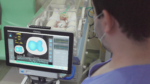
ENLIGHT 2100 is designed for use close to the patient, bringing regional lung imaging and respiratory analysis directly to the bedside.
Key design features include:
- High-definition colour touchscreen
- Integrated electrode system
- Dedicated flow sensor
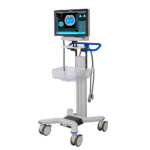
- Mobile trolley configuration
- Rechargeable internal battery providing approximately 30 minutes of backup operation
- Patient-specific electrode belts
- Data recording and export capabilities
The system can be used in hospital environments with adult, pediatric and neonatal patients receiving assisted or controlled mechanical ventilation, subject to the applicable instructions and contraindications.
Electrode Belt Design
The electrode belts are designed to provide the electrical contact required for EIT measurements while maintaining a thin, flexible profile.
Adult and pediatric configurations use integrated electrodes and can be combined with the Addere cover, which incorporates conductive gel to facilitate skin contact without requiring additional contact agents.
The neonatal electrode belt is designed for neonatal application and has its own integrated conductive gel layer.
The appropriate belt must be selected according to the patient’s thoracic dimensions. Correct positioning, belt size and signal quality are essential for reliable measurements.
Adult and pediatric Addere covers are intended for use for up to 48 hours, while the neonatal electrode belt has a maximum use period of 24 hours, according to the manufacturer’s instructions.
Broad Patient Coverage
ENLIGHT 2100 supports adult, pediatric and neonatal monitoring using dedicated electrode belt sizes.
The product documentation specifies thoracic circumference coverage of approximately 21.5–134 cm across the belt range, with additional application configurations described by the manufacturer.
This range allows the system to accommodate a broad variety of patient sizes within the specified application limits.
The V/Q Tool, however, is restricted to its indicated patient population and must not be used in neonatal or pediatric patients.
Technical Specifications
| Feature | ENLIGHT 2100 |
| Technology | Electrical Impedance Tomography (EIT) |
| Monitoring approach | Non-invasive, radiation-free |
| Primary information | Regional lung ventilation and, with the applicable tool, pulmonary perfusion |
| Temporal resolution | 50 frames per second |
| Electrical feed-current frequency | 125 kHz |
| Display | High-definition colour touchscreen |
| Patient population | Adult, pediatric and neonatal, with appropriate belts |
| Electrode configuration | Integrated electrodes in patient-specific belts |
| Respiratory measurements | EIT data and, with the flow sensor, respiratory waveforms and applicable parameters |
| Specialized tools | PEEP Titration, Asynchrony and V/Q assessment, subject to configuration and indications |
| Trend analysis | Up to 48 hours of available trend data |
| Data management | Recording, reports and export functions |
| Flow sensor | Dedicated sensor compatible with ventilators from different manufacturers |
| Backup battery | Approximately 30 minutes |
| Power supply | 100–240 V AC, 50/60 Hz |
| Maximum power consumption | 60 W |
Technical information is based on the supplied ENLIGHT 2100 product documentation. Final specifications, accessory availability and applicable features should be confirmed for the exact configuration supplied by SANTAIR.
Why ENLIGHT 2100?
A More Detailed View of Respiratory Function
ENLIGHT 2100 brings together regional lung imaging, respiratory mechanics and specialized assessment tools in a single bedside system.
Its key strengths are:
- Regional visualization: See how ventilation is distributed across the lungs in real time.
- High temporal resolution: Observe dynamic changes at 50 frames per second.
- Individualized assessment: Examine differences between lung regions and evaluate responses to ventilatory interventions.
- PEEP assessment: Review regional collapse, hyperdistension and compliance during titration.
- Patient–ventilator interaction: Identify and quantify selected asynchronies and breath stacking.
- Ventilation–perfusion assessment: Obtain regional perfusion information and evaluate V/Q coupling with the applicable tool.
- Longitudinal review: Analyze recorded data and compare respiratory changes over time.
- Integrated measurements: Combine EIT imaging with respiratory waveforms and parameters obtained through the dedicated flow sensor.
- Flexible patient coverage: Use dedicated electrode belts for adult, pediatric and neonatal patients.
- Radiation-free technology: Monitor regional lung changes without ionizing radiation.
Together, these capabilities provide healthcare professionals with an additional source of information for respiratory assessment, supporting a more comprehensive understanding of lung behavior at the bedside.
Supporting Precision Ventilation
Mechanical ventilation requires continuous assessment of the patient’s respiratory condition and response to treatment. Global respiratory parameters remain essential, but regional information can provide an additional perspective on how the lungs respond to ventilatory support.
ENLIGHT 2100 makes regional ventilation patterns visible and provides tools to assess selected aspects of pulmonary perfusion, respiratory mechanics and patient–ventilator interaction.
By combining these complementary sources of information, the system supports healthcare professionals in evaluating ventilation strategies, investigating changes in lung behavior and assessing the response to clinical interventions.


